Small kitchen organization • Updated October 15, 2026
A better kitchen drawer starts with what fits.
Before buying an insert, measure the usable space and decide what belongs there. This guide helps you choose between spice storage, lid storage and reusing something you already own.
Affiliate disclosure: As an Amazon Associate I earn from qualifying purchases. The Amazon links below are paid affiliate links; we may earn a commission at no added cost to you. This is researched buying guidance, not a hands-on product test.
1. Empty one drawer and choose one job
Take everything out. Group the items you use together, remove items that belong elsewhere, and set aside anything you no longer need. Choose the drawer's main job before choosing the organizer. Mixing cooking utensils, spice jars and loose lids can make it hard to find anything.
If a small box, tray or container you already own keeps the items accessible and lets the drawer close freely, you may not need to buy anything.
2. Make these three fit checks
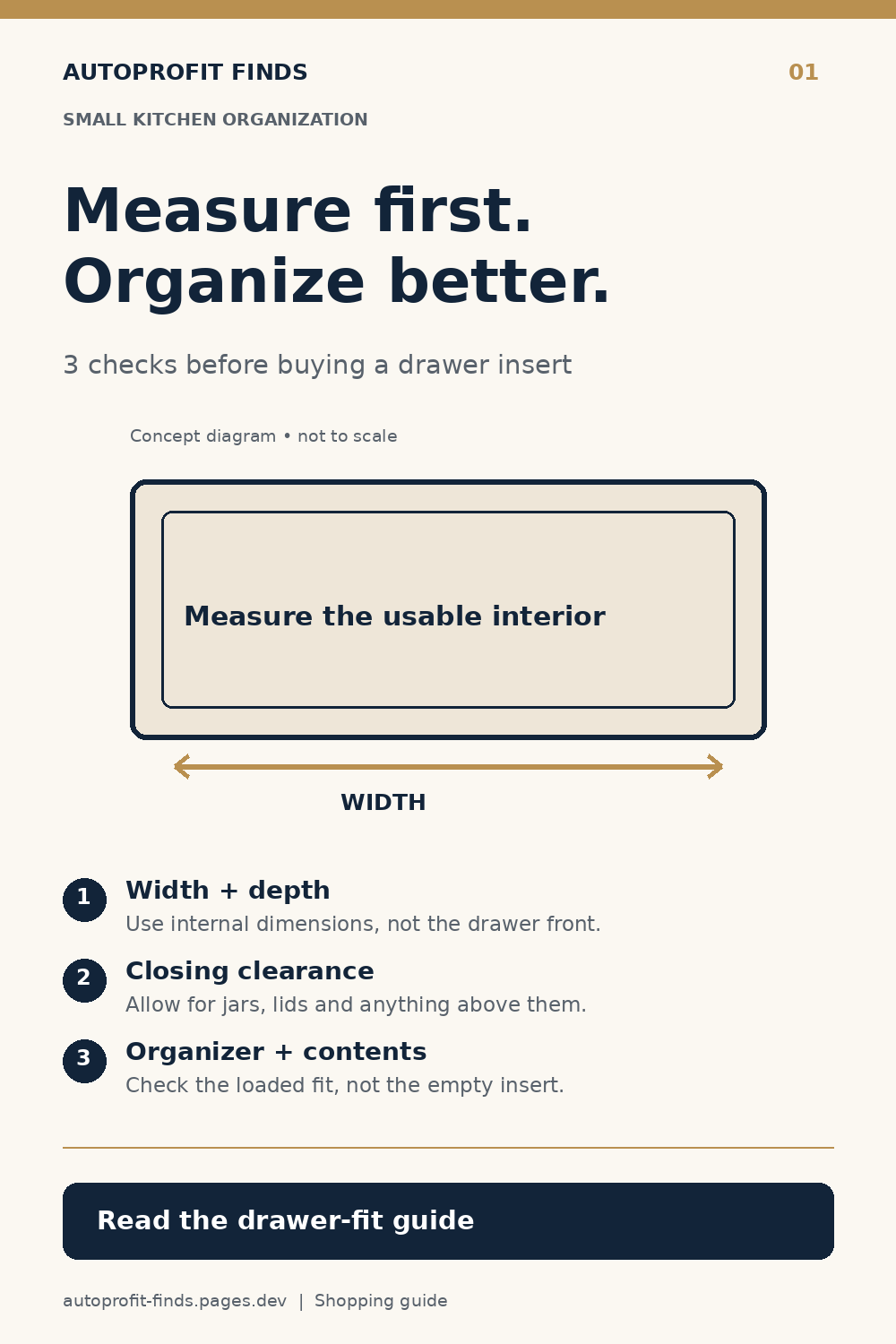
- Internal width and front-to-back depth: measure inside the drawer, including the narrowest usable section. The outside drawer front is not the available storage area.
- Closing clearance: allow for the contents above the organizer. Check for rails, lips and obstructions. Never force a drawer shut to test a fit.
- Organizer plus contents: compare the exact model's dimensions with the drawer, then account for jar diameter, lid sizes and dividers. An empty organizer fitting does not prove the loaded setup will fit.
Use one measurement unit consistently. Write down the dimensions before opening a product listing and verify the chosen variant, not just a similar photo.
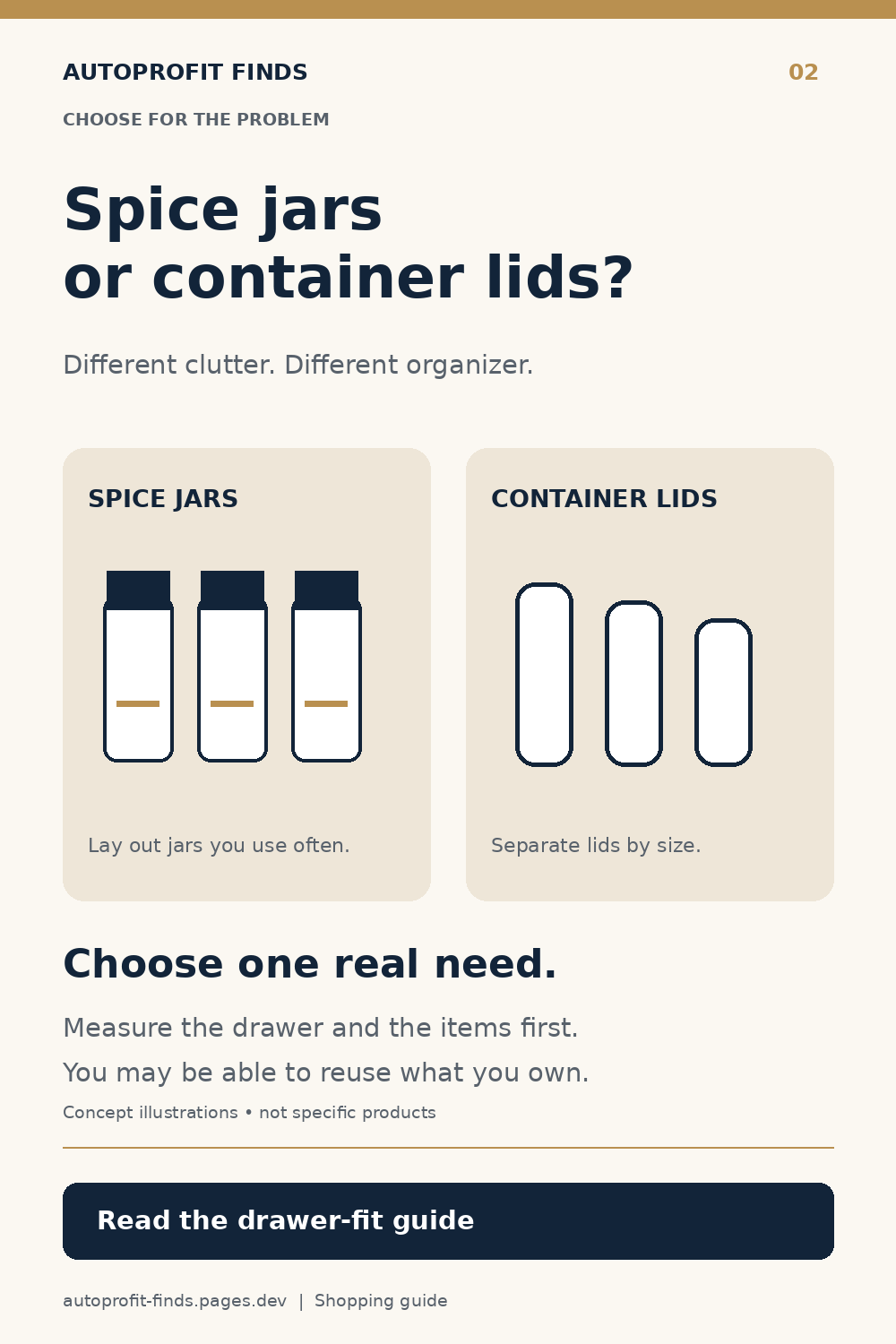
3. Spice jars or container lids?
4. Two shopping examples to compare
These examples address different needs. They are not a ranked test, and you do not need both. Check current details, seller, availability and return terms on Amazon.
For spice jars
SpaceAid Bamboo Spice Drawer Organizer
Example variant: expandable bamboo organizer, jars not included.
Consider it if you want to arrange jars in a suitable drawer. Verify the current adjustment range and loaded fit against your measurements. Skip it if a shelf or existing tray already works.
View example on Amazon (paid link)
For container lids
YouCopia StoraLid Organizer
Example variant: Medium Classic Edition lid organizer.
Consider it if your lids need separate places. Verify the current dimensions and supported lid arrangement. Skip it if it cannot fit your drawer or if an existing container keeps your lids accessible.
View example on Amazon (paid link)5. Try the layout before ordering
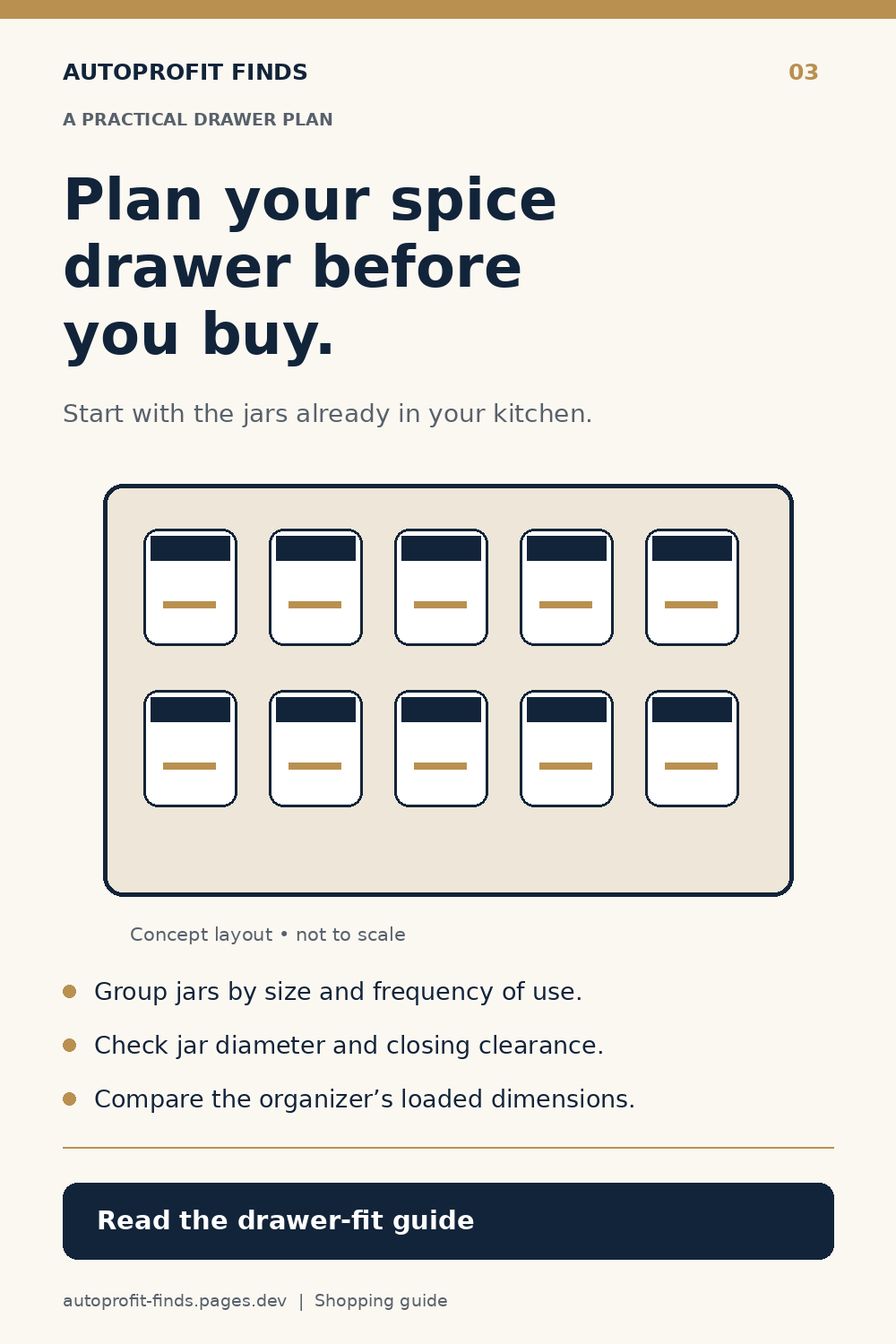
Mark a proposed organizer's footprint on paper using the listing's current dimensions. Place your items within that area to identify obvious fit problems. A paper layout does not prove height clearance or structural fit, so check those separately. Keep frequently used items accessible and avoid obstructing the drawer mechanism.
For a spice drawer, group jars by size and how often you reach for them. Check jar diameter and loaded height. For lids, match lids to the containers you keep before deciding how much separation you need.
Save the planning checklists
Original concept diagrams; not to scale and not depictions of specific branded products.
Before you leave
Choose one drawer, one need and one fit check at a time. A useful purchase should make your routine easier; a no-purchase solution is a good outcome too.
Explore the broader home organization buying guide or return to all finds.